Showing posts with label Horror. Show all posts

Thursday, May 20, 2010

Bloody Nightmares #22: Burning Dead (2004)

Photobucket

Sick of zombies yet? It wasn't that long ago that genre fans were clamoring for films featuring the walking dead; when the idea of another George Romero zombie film seemed like some sort of beautiful dream. Flash ahead a decade and - after 28 Days Later, the Dawn of the Dead remake, Shaun of the Dead, Land of the Dead, Zombieland and the literally hundreds of tributes, sequels, remakes, and reimaginings - you would be excused for perhaps being a little burnt (ha!) out on the genre.Well, thankfully while Burning Dead certainly features zombies - and plenty of them - the film stays far enough away from traditional z-word material that it's able to tell a story that is (wait for it) fairly original. Combine this with some committed performances and an ability to work inside its limitations, and you have an effort that manages to rise above other no-budget living dead efforts.

Returning to his home town after a decade away, a guilt-ridden Jim Reed (D. Vincent Ashby) finds himself suffering from nightmares prominently featuring zombies blaming him for starting the fire that devastated the town (and killed his parents) when he was a teenager. Even worse, Jim has started to see these visions while awake and worries that he's starting to lose control - a theory supported by him wandering into his nephew's bedroom and trying to kill the kid with a hammer. When Shelly, an old flame (ha!), shows up Jim begins to wonder if his dreams might really represent some deeply hidden memories of the fire. His search for the truth leads to some uncomfortable, and supernatural, secrets being revealed.
Photobucket

Much credit for the minor success of Burning Dead must be given to D. Vincent Ashby who, despite some shaky moments, is obviously giving everything he has to make this role work. His Jim is a tormented soul, who has a habit of losing himself in flashbacks and is almost comically solemn when speaking about nightmares or his own disturbed memories. Ashby is asked to perform a lot of dialog - and even occasionally emote - and does so surprisingly professionally with the proper amount of brooding to give the often silly material the proper weight. The supporting cast are also a step above most other shot-on-video efforts, with Jon Russell as Jim's childhood friend Bill Nash doing a fine job on comic relief.

Unfortunately director George Demick doesn't give Ashby or the rest of the cast as much support as they deserve. While Demick wisely stays away from many visual tricks, his camera work tends to be rather stationary which makes some of the longer dialog scenes interminable. Image quality varies significantly, with daytime shots looking clear and underlit night shots forcing me to squint to make out any details. There's plenty of digital artifacting as well, but that could be the result of the mastering of the disc, so I won't blame Demick (or Director of Photography Tracy C). I will blame him for some bizarre sound issues that pop up throughout where all dialog comes from one audio channel, with background music coming from the other. It's needlessly distracting, and draws a lot of attention to edits - which are sometimes accompanied with a sudden switch to the sound coming out of both channels. Pretty inexcusable.

Still, Demick deserves credit for an often intriguing script which takes a few surprising twists near the end. Much of the first twenty minutes deals with whether Jim's hallucinations are actually occurring, but the film doesn't dwell on the suspicions of the people around him, instead focusing on the mystery of how the fire occurred and why Jim is being held responsible. While the actual content isn't always perfect - Bill's explanation of his wife's death is certainly rather odd - it all does add up to a rather neat climax and the film doesn't waste time getting to the end once things start to speed up. 

Photobucket

Remember what I said about working within its limitations? Well, that goes for make-up and special effects as well as Demick trades in gore for some decent (and plentiful) zombie make-up and LOTS of fog. The burnt flesh on the zombies actually looks quite good, and while there isn't much blood to be found, these really are not the gut-munching sort of zombie. There's only one scene featuring nudity, but it's actually rather effective - intentionally bringing to mind a rather famous scene from The Shining - and it's a slightly more mature woman as well which is definitely a rarity in this collection.

Burning Dead is presented in a full-frame presentation, and is obviously shot on digital video. As mentioned, the digital artifacting is atrocious during the night scenes, but it's generally very watchable. There are a few random digital glitches, but those are par for the course at this point.

This is part of the Bloody Nightmares collection, and therefore has absolutely no extras. Not even chapter stops. I can't imagine why that is.

Photobucket

An enjoyable no-budget sorta-zombie film that manages no to tread the same old ground, Burning Dead takes an original concept and some willing participants and manages to create a perfectly decent 90 minute horror film. It's not very scary, and the technical problems would likely scare away those used to bigger budgets, but there's plenty to appreciate here and it's a shame that it seems to be nearly completely unknown - it doesn't even have an IMDB page! You could definitely do a lot worse.


Sunday, October 11, 2009

Entrails Of A Virgin (1986)

Photobucket

As a dissatisfied youth growing up in Newfoundland in the mid-1990s I used to scour over the film listings in the Video Search of Miami guides, or other similar rare movie collections, astounded at the idea of so many strange and fascinating international films that I may never get the chance to actually see. One title that always jumped out at me was Kazuo 'Gaira' Komizu's notorious Entrails of a Virgin, which seemed to hold an almost pornographic vileness in its title alone. Of course my knowledge of the film beyond the lurid title was limited, so that Synapse has gone to the trouble to release the film on DVD certainly caught my attention. Could it possibly live up to the images that floated about my teenage head?

Well of course not. I was a twisted teen. And the truth is that this combination of sex and violence (“one candy, twice the fun” as Komizu says in the special features) makes an uneasy mix, particularly the former which is expressed in endless soft-core sex scenes featuring copious amounts of dry humping and the usual Japanese digital blurring. The extremes of violence seem to imply an over-the-top, humorous attitude, but the characters are so unpleasant and thinly drawn that what could have been a lot of sleazy fun just left me cold.

Photobucket

The barely existent plot certainly isn't going to win points for originality. A group of female models and photographers are headed to their next shooting location when, because of some overwhelming fog, they run into what they believe is an animal. It's actually a bizarre (and unexplained) mud-man who decides to take revenge on the group when they take refuge in an abandoned cabin. That night the photographers show themselves to be truly reprehensible, humiliating one of the girls in a wrestling match before forcing themselves on the other two. Soon the mud-monster-man gets in on the action, gruesomely killing the men and raping the women -including the psychotic Kei (Megumi Kawashima) who has been driven insane by her humiliation - before targeting the virginal Rei (Saeko Kizuki).

Komizu actually fills the early scenes with some amount of style, inter-cutting shots of the women modeling with some intense, near-pornographic sex scenes. And the early scenes of forest covered in fog brings to mind The Evil Dead and similar “cabin in the woods” horror movies. These early modest pleasures are soon replaced with repetitive, tiresome scenes of the women being man-handled, along with the monster sulking around and occasionally murdering one of the cast. These murders are cartoonish, involving rubber heads and unconvincing effects, and serve only to momentarily break up the sex.

Photobucket

Things do start to pick up slightly in the last act, with Kei's madness adding to the proceedings – culminating in the film's most notorious scene where she uses a severed arm to masturbate with. This is one of the few scenes which are able to capitalize on the bad-taste promise of the title, but nothing else really comes close to matching it, despite some truly unpleasant shots of various bodily fluids. Komizu sometimes throws in a few interesting shots, particularly during the murders which are occasionally punctuated with a random clip of meat being pulverized, but these interesting moments are few and far between and there's little evidence that the director is trying to say anything interesting.

It's a little hard to judge acting skill in a film like this, particularly when it's subtitled, but the models are all attractive, though creepily young looking. The scummy photographers are reprehensible from the first frame, and never come close to redeeming themselves. The mud-man is exactly that, an actor with mud and grass packed over parts of his body. Special effects are weak, but it's this cartoonishness which actually keeps the film from being a total waste of time.

Photobucket

Despite my reservations on the quality of the film itself, Synapse has again done a wonderful job bringing it to DVD, along with its spiritual sequels Entrails Of A Beautiful Woman (1986) and Female Inquisitor (1987). The image quality is a bit dark, but that's likely a fault of the filmmakers, and subtitles are clear and easy to read. There is very little incidental music in the film, and what is there - composed by Hideki Furusawa - isn't very impressive.

The only included special feature is an interview with director Kazuo 'Gaira' Komizu, who proves to be truly obnoxious in the brief conversation. More interested in babbling on about nonsense than talking about his film, the whole thing becomes irritating rather quickly. Quite a dissapointment.

Photobucket

Perhaps if I had seen Entrails Of A Virgin as a teen it would have been as shocking as its title would imply, but while there are still a few loathsome moments throughout the final product is very difficult to trudge through - despite the mercifully short running time. The sex is almost wholly unpleasant, and the violence is too silly and short-lived to appeal to fans of gore. Synapse has done a good job of bringing this title to North America, but in the end it's simply too boring and repetitive to enjoy as anything but a slight bad-taste curiosity.

Thursday, October 1, 2009

Vampire Circus (1972)


Quite a few scholars of the filmography of the vampire give credit to Universal Film's 1931 monster epic, Dracula, as the movie that made vampires sexy.

Personally, I give sole credit to Hammer Films for not only successfully linking eroticism with the vampire legend, but also turning the vampire into one of the most reliable marketing vehicles in the history of motion pictures.

Between 1958 and 1974, Hammer produced no less than eight feature length films featuring Dracula as the primary nemesis as portrayed by the legendary Christopher Lee. However, two Hammer films arguably did more to give shape to the vampire as sex symbol than any other.

One is Vampire Circus from 1972.

In the early seventies, Hammer Films experienced the proverbial sea change old guard Hammer executives slowly left the business and were replaced by a crop new producers who not only had a finger on the pulse of new audiences, but also were eager to take daring risks if it resulted in more profitable films.

Vampire Circus really is the blueprint of the 1970's Hammer horror movie. It tried its best to break every convention possible not only with the traditional trappings of vampire folklore, but it additionally charged the material with a sense of sexuality rarely seen in the medium before now.

And it does this in the first twenty minutes of the film.

In the opening scenes we discover that a remote village sometime in 17th century Austria serves as the hunting ground for a sadistic, undead scourge named Count Mittenhaus (Robert Tayman). Mittenhaus's dashing good looks and supernatural charisma have allowed him to make a thrall of the wife of the local school teacher.

Anna Miller (Domini Blythe) then serves her count by luring women and young girls alike to Mittenhaus's castle, where he then feasts on the blood of his prey.

Eventually, the villagers led by Anna's husband, Professor Albert Miller (Laurence Payne) catch onto Mittenhaus's plot and band together to put an end to the count. They manage to put a stake through his heart and then burn down the castle, but not until after Mittenhaus swears to eventually take his vengeance.

The action then picks up a few years later and we see that the village has been isolated due to a growing epidemic that most of the townsfolk blame on Mittenhaus's dying curse.
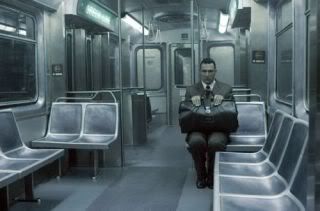
Shortly thereafter, a wandering band of gypsies arrive to entertain and ease the suffering of the locals with song and acts of acrobatic excellence, but unbeknownst to them, the seemingly benevolent troupe of performers is in actuality a group of vampires led by the undead cousin of Count Mittenhaus; the dangerous and enigmatic, Emil (a very young Anthony Higgins performing under the name, Anthony Corlan).

Their mission? To bring Count Mittenhaus back to life so that he may avenge himself against the people that dared to defy him.

As I mentioned before, Vampire Circus does a lot of things differently than previous Hammer vampire films.

For starters, it abandons almost all of the usual vampire folklore as Emil and his fellow vampire conspirators can function in sunlight so long as they are in a different form. In Emil's case, he takes the rather odd form of a black panther during the daytime and hides in plain sight with the other jungle cats kept by the traveling circus.

Vampire Circus also retains the Hammer introduced concept of blood serving as a catalyst to reincarnate a vampire that hasn't been utterly destroyed by sunlight. This plot device served Hammer Films well in subsequent films in the Dracula catalogue.

Secondly was the erotically combustable screenplay. There is no better way to show just how seductive a vampire is than to have some nubile young thing stare at him with that vacant, come hither look on her face while peeling off every stitch of clothing that she has on. If vampires and attractive naked women are your things then fella, this is the movie for you.

Thirdly is the fact that for a vampire movie, Vampire Circus is a lot gorier than you'd expect it to be. In some scenes Emil rips people to shreds while in panther form, while in the climactic scene where Mittenhaus pays the price for his evil, his demise occurs in a not so tidy manner.

The final thing is that this movie accomplishes all of this with a list of relative unknowns, as a whopping zero members of the usual Hammer standards have a presence in this movie. Some may recognize Anthony Higgins from his later portrayals of both Sherlock Holmes and Professor Moriarty and of course, David Prowse aka the body behind Darth Vader is cast in the role of the circus's silent strongman. It is very odd to see a Hammer vampire movie with no mention of Peter Cushing or Christopher Lee, but here it is and it is a damn fine piece of work.

In line with Hammer tradition, director Robert Young does everything in his power to make Emil and the other vampires as alluring as possible, while also making sure that the audience remembers that they are evil incarnate and not creatures to be sympathized with. The vampires in Hammer films use their seductive wiles on humans the way scorpions use their stingers: it is the mechanism by which a hunter secures his meal.

Although I found it somewhat uncomfortable to watch, Young continually reinforces the malevolently predatory nature of his vampires by having them prey on the younger villagers, especially the children. Watching the powerful and statuesque Count Mittenhaus gaze longingly in hunger on the pale throat of a small, defenseless girl and knowing that his only desire is to take her life to sustain his own really does bring Young's concept to terrifying clarity.

These creatures are far different than the Ricean versions we find in cinema or literature today; individuals bordering on emo that are "misunderstood" and view their condition as both blessing and curse. Although these "vampires are people, too" works such as Twilight kinda bother me phillosophically, they do serve the noble purpose of preserving the vampire for future generations.
Suffice to say that if you're looking for a retrospective feel to your Halloween movie viewing this season, then track this movie down with the swiftness.

Sunday, February 22, 2009

Bloody Nightmares #5: Serial Killer (2002)

Photobucket

A few years before Demon Slaughter, Director Ryan Cavalline put together a much more serious take on the horror genre in Serial Killer. More of a meditation on the mind of a murderer than a straight stalk and slash type of movie, Cavelline nonetheless packs the film with naked ladies and a few familiar faces to Z-grade horror fans.

The film spends much of its running time cutting between Michael (Adam Berasi, also the lead in Demon Slaughter), a professional writer who has begun to receive violent videotapes after publishing a book on serial killers, as wel as the exploits of an unamed serial killer (Vic Badger) who has apparently captured Michael's wife and child. Also interspersed throughout are filmed testimonials from actors portraying serial killers, including low-budget legend Joel D. Wynkoop, as well as terrified statements from the serial killers (naked and tied up) victims. And guess what? There's a twist at the end! Try your best not to guess it in the first ten minutes.

Photobucket

At times Serial Killer is quite an unpleasant movie to watch, but unlike Nightmare Asylum this time it's actually intentional. The serial killers speaking to the camera, while sometimes unconvincing, provide some powerful and disturbing moments that, frankly, give the film more power than it deserves. The main plot leaves much to be desired, and while the serial killer scenes have some strong elements, it's a bit too grim and humourless to be entertaining. And while I appreciated the bevy of naked adult entertainers on display, their frequency began to feel more and more exploitive as the film went on, particularly when they detail their respective sexual assaults.

But despite my objections to some of the content, Cavelline was smart to edit these scenes in to break up some of the monotony of Michael's brooding. He spend much of the film drinking and looking dour which quickly starts to become tiring. It's also interesting that graphic violence is mostly avoided, at least until the end, which was a surprise after the goopy excess of Demon Slaughter.

Photobucket

I praised Adam Berasi's performance in Demon Slaughter, but here he's really quite unconvincing as a tormented writer. Much better is Vic Badger who hammed it up as Satan in Demon Slaughter, but his unhinged act works much better here. The serial killers on the interview tapes (which include producer Ron Bonk and z-horror mainstay Ron Ford) do their job efficiently, but it's Wynkoop who is most memorably creepy.
While it uses only a few locations, the technical aspects of the film are respectable. Aside from an ill chosen rock song during a cemetary scene, the music is very well done. Dialogue is usually intelligible, and the special FX are all tolerable, though again sometimes hurt by poor editing.

Photobucket

Though it's only a small detail, there was one particular moment of the film that felt quite careless. I was irked by Michael writing "Your Dead" on a note for an autograph seeking visitor. It's difficult to believe that a professional writer would make such a slip on Your/You're, and it's almost equally hard to believe that it ended up in the finished film without someone noticing.

Serial Killer is presented in a decent fullscreen transfer free of some of the pixelation issues that plague other films in the Bloody Nightmares collection. Luckily there are none of the sound issues which made Demon Slaughter so difficult to sit through.

Photobucket

A decent stab (ha!) at a difficult genre, Ryan Cavalline deserves credit for trying something a little different in Serial Killer, though he fails as often as he succeeds. Hampered by some bad performances and an uneven story, there are still enough effective and creepy moments throughout to make it a worthwhile watch. However, a bit more care with the production side of things could have resulted in a much stronger film.

Friday, October 31, 2008

Jack Brooks: Monster Slayer (2007)

JBTitle

PLOT:


Remember those blissful nights you spent, out in the forest, camping with your family? Remember the fire, the marshmallows, the storytelling? Remember your family being ruthlessly slaughtered by a forest troll? No? Well, Jack Brooks does. And he’s pissed. Since that time, Brooks (Trevor Matthews) has become a plumber (and my understanding is that this means he’s voting for McCain), one with an immense anger issue. How does he cope with his anger? Considering the title of the movie, you can probably guess.

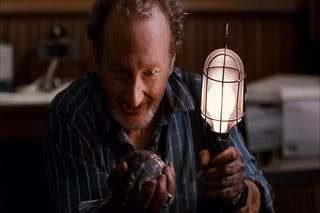
The monsters in question--the monsters who Jack Brooks must slay--are led by Professor Gordon Crowley (Robert Englund), who teaches night school for a group of ne'er do-wells, Jack among them. Prof. Crowley is a well-meaning old chap who unfortunately runs afoul an evil black heart that takes him over, and gives him the power to create zombies. Or something. Zombies that Jack Brooks must slay. In the process, Jack overcomes his anger issues, and saves some members of his night class--but not all of them, or it wouldn't be gory enough.

REVIEW:


JB1

Jon Knautz’s Jack Brooks: Monster Slayer is a harmless and fun creature feature, the kind of thing that you can pop on when you want a few laughs and a cheap thrill. It’s not really audacious, or ground breaking, or even particularly interesting, but it’s entertaining and it's reasonably well done. I guess this is damning it with faint praise, but all things considered, Jack Brooks doesn’t really screw anything up, and in the realm of low-budget horror films, that definitely counts for something.

The film is anchored around the performances of Englund and Matthews, and both are up to the task. Englund is able to give the sort of schlocky-yet-consummate performance you’d expect from an actor who has been living and breathing the genre for years--he’s practically this generation’s Vincent Price. He might not try very hard, but he doesn’t have to. Prof. Crowley’s an amiable guy, and Englund plays him in such a way that you can’t help but feel bad for him once he’s taken over by the ancient, evil force, making him the bad guy of the film.

JB2

Matthews, a relative newcomer, plays Jack as a high-strung loser, an average dude who can’t catch a break. His dialogue, though forced, is usually good for a laugh; complaining about his violent temper, he says: “Fuck man, I broke a bottle over my head once because I couldn’t open it! I mean, you know… that doesn’t even make any sense!”

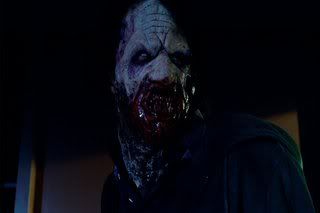
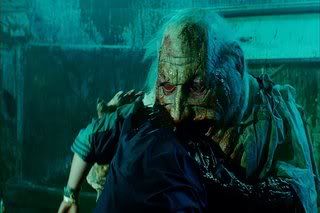
There are no computer graphics in Jack Brooks, so some old timey horror purists should be happy--for instance, the monster that Prof. Crowley eventually morphs into is a gigantic puppet that took as many as eight handlers to operate at one time. In this sense, it has a definite old school feel to it; it’s kind of like a Stuart Gordon film (though less sleazy), or Evil Dead II (though less funny). Though low-budget, most of the monsters are quite impressive-looking; the cyclops and the Professor-creature are perhaps the most entertaining of the bunch.

JB3

The Anchor Bay DVD of Jack Brooks: Monster Slayer is presented in its original 1.78:1 aspect ratio, and contains a host of special features, including an audio commentary with the director, the writer, the composer, and Jack Brooks himself, Trevor Matthews. It’s nice to see a few behind the scenes videos; one that gives you insight into the monster-making process is interesting, but I’m not sure that anyone needs to see video from the World premiere at Sitges. Storyboard comparisons; a still gallery; deleted scenes; an art gallery; the trailer--all that shit is there.

Jack Brooks: Monster Slayer may not break new ground, but it’s good entertainment for anyone who wants to kill 80 minutes with some decent laughs, some old school monsters and gore, and a reasonable amount of bloodshed. Though I can see the humour falling flat for some, in most cases I think it hits its mark, and though the film might wait too long to bring on the real bloodshed, the final battle is gruesome and fun enough to make up for it.

Thursday, October 23, 2008

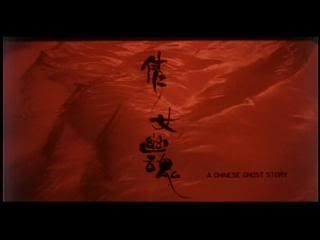
A Chinese Ghost Story (1987)


PLOT:

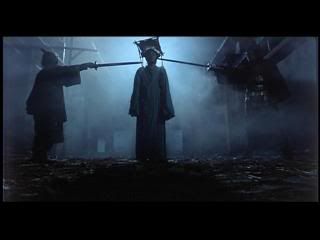
A young tax collector (Leslie Cheung) finds his documentation soaked with rain, forcing the poor scholar to take refuge in the local Len Ro Temple. There he draws the ire of Taoist monk Yen Che-hsia (Wu Ma) who warns him to stay away from the seemingly haunted temple. After a close scrape with some zombies, the young man is seduced by spirit Nieh Hsiao-tsing (Joey Wang), who spares his life. The two fall in love, but the young ghost is pressured to kill and is engaged to be married in a matter of days. The tax collector, with help from the now sympathetic monk, travels into the spirit world to stop the wedding and release Nieh's soul.


REVIEW:

The stories of 17th century Chinese author Pu Songling have often laid the groundwork for Asian fantasy films. His collection Liaozhai Zhiyi (Strange Stories from a Chinese Studio) contained the story Nie Xiaoqian (The Magic Sword) which is the basis for Tsui Hark and Ching Siu-tung's A Chinese Ghost Story. Followed by a number of sequels, rip-offs (often starring Wu Ma or Joey Chang), or television adaptations, the film provides an original mix of horror, comedy, martial arts and Spielbergian special effects to great effect.


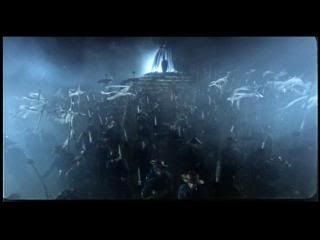
While certainly dated, this mixture of impressive (for the time) Hollywood-style special effects with fantasy wuxia elements (which Hark dabbled with in Zu Warriors from the Magic Mountain) and Evil Dead II-style Horror/Comedy has held up surprisingly well. In fact, its story of ghostly love is strangely affecting because of the two lead performances and the dreamlike glow which seems to exist throughout.

It's not surprising that Joey Wang was typecast as her ghostly persona from this film after its success, as she embodies both the forlorn ghost and vengeful spirit equally well. The late Leslie Cheung provides most of the comic relief as the bumbling tax collector, but is also disarmingly (and necessarily) charming and heroic in his attempts to save his lady. Ma Wu's expressive face gets a fully work out in the film, and he gets several opportunities to show off some impressive swordplay, as well as his singing skills in a rather bizarre musical interlude.


Similar to how Steven Spielberg gets a great deal of credit for the films he produced in the 1980s, this film's success is usually greatly attributed to producer Tsui Hark. However, director Siu-Tung Ching has had an impressive career in his own right, and deserves credit for some impressive choreography and influential visuals which seemed to have a great influence in future Chinese fantasy films (such as The Bride With White Hair). Both men also deserve credit for balancing elements of broad humor, kung-fu, horror, romance and fantasy in a way that still feels fairly natural.

While this is hardly a horror film in the traditional sense, it doesn't shy away from gruesome moments My favorite being when the ethereal ghost seduces a samurai, the camera sweeping into his mouth and through his body as we see him instantly age into a dried up corpse. Unfortunately, when the humor gets broad, particularly in a scene where Leslie Cheung's character attempts to contact the police, it betrays its subject matter into silliness. There's a tradition of this sort of humor in kung-fu films, and perhaps it's simply a cultural difference (combined with some shaky subtitles) which made these rare moments such a chore.


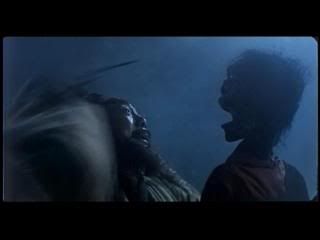
While certainly revolutionary for the time, it's hard to deny that some of the film's effects may appear slightly rough around the edges for modern viewers. The stop-motion zombies are a lot of fun, though more cheesy than scary, and some of the blue screen and rear projection effects look less than stellar. That said, the sheer scope of the film required a massive amount of special effects, and what is shown onscreen is admirable and even the more dated moments only add to the charm.

The currently available Region 1 DVD from Image Entertainment features a fairly clean, though dark, print of the film in its original 1.85:1 aspect ratio. Audio is available in both Cantonese and Mandarin, though the English subtitles leave a lot to be desired. In a film as steeped in fantasy and Chinese mythology as this, a more accurate translation would have improved the experience, though an average viewer will still be able to follow the plot.

The only special feature is the film's trailer.


A Chinese Ghost Story created a new standard for mixing fantasy and martial arts, and remains a hauntingly romantic film. Certainly deserving of a better presentation on DVD, it's worth seeking out for fans of Chinese fantasy or swordplay films such as House Of Flying Daggers or Crouching Tiger, Hidden Dragon. The film was followed by two sequels, as well as an animated film in 1997.

Thursday, October 9, 2008

Chopping Mall (1986)


PLOT:

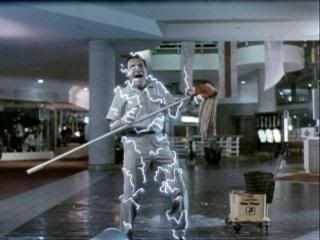
So, there's this mall. And it has a robot security system, which are sort of like those automatic vacuum cleaner-bots except they shoot lasers! Anyway, these things are fool-proof, until the mall gets hit by lightning turning them into KILLBOTS (Chopping Mall's original release title). Eight teenagers (including Barbara Crampton from Re-Animator, and Tony O'Dell from, uh, Head Of The Class) are having a late night party and start to get picked off one by one by these metallic monsters, until they arm themselves with supplies from the mall and attempt to get some revenge. The whole thing takes 77 minutes, which is just long enough.


REVIEW:

It's difficult to be too critical of a film like Chopping Mall, since it has such modest goals. It's essentially a dead teenager slasher film with Short Circuit-like robots, and (despite a general lack of suspense) it delivers on that front. Lots of teens getting naked and having sex, and a reasonable amount of gore with a few cameos from the Roger Corman crew for cult-credibility. And at less than 80 minutes it doesn't overstay its welcome.


Its gains are still rather meager, however, and doesn't serve to separate the film greatly from the hundreds of similar films released at the time. Because of the strangely short running time, the pacing seems a bit off and we're faced with a semi-climactic battle taking place 45 minutes in. With things moving forward this quickly character development tends to take a back-seat.

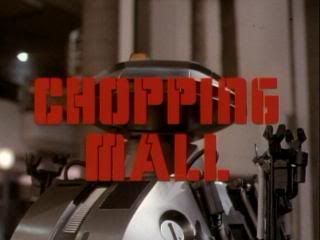
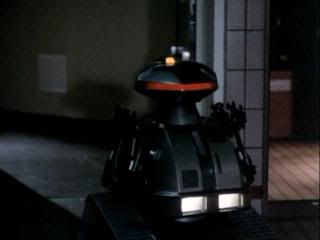
The robots themselves are quite impressive for such a low budget feature, and the director Jim Wynorski (director of too many films to mention) speaks highly of their maneuvering ability on the commentary. They have arms with clamps on the end that they raise threateningly, as well as the ability to shoot darts and (the considerably more effective) laser beams. Some effort is made to give the killbots a measure of personality, though it sometimes serves to make the main cast appear even more bland.

The in-jokes are fun, with appearances from Paul Bartel and Mary Woronov (reprising their roles from the cult classic Eating Raoul), Dick Miller (reprising his role from A Bucket Of Blood), Mel Welles (Attack Of The Crab Monsters), and a blink-and-you'll-miss-it appearance from Angus Scrimm (Phantasm). Wynorski also throws in shots of his own movie posters because.. heck, why not?


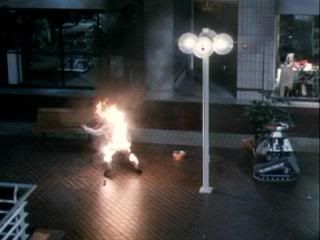
The shopping mall location (Sherman Oaks Galleria, used in Commando!), brings unfortunate comparisons to Dawn Of The Dead, though if there's any subtext in this about our consumer culture, it's well hidden. The setting is used to good effect, though, with some well executed fire stunts and explosions.

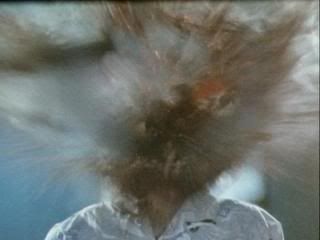
The gore in the film is minimal, though the famous head explosion really does look quite outstanding. The filmmakers obviously realized this, since they put the shot in the trailer. Mostly the effect seems a bit out of place, however, as the film relies more on its rapid pace than extreme violence.

Chopping Mall has been difficult to track down on VHS for years, so it's nice that a few features were included on the long awaited DVD. Unfortunately, the film is presented in a rather rough looking full screen transfer that is only marginally better than a good home video copy. Sound is adequate, with the synth-heavy score (by B-movie music regular Chuck Cirino) coming through loud and clear.


The commentary by Jim Wynorski and (producer/writer) Steve Mitchell is a lot of fun, with them not being afraid to poke a little fun at their film while still remaining very complimentary about their cast and crew. There's plenty of great stories about working with Roger Corman (and his wife), and the two men have a strong memory for details which make them a pleasure to listen to.

We're also treated to a short featurette Chopping Mall: Creating The Killbots which focuses on the efforts of special effects man Robert Short to bring the killer robots to life. There's a good deal of information repeated from the commentary, but the added perspective of Short keeps things interesting.


The original trailer (/w head explosion) and a photo gallery (/w original poster calling the film Killbots) round out the special features.


Chopping Mall is a disposable example of 80s schlock, rising slightly above average thanks to a novel concept and decent production values. A lurid cover and appearances from cult faves have given it a strong reputation, but it does little to distinguish itself from the bloated genre.

Tuesday, October 7, 2008

Jacob's Ladder (1990)


PLOT:

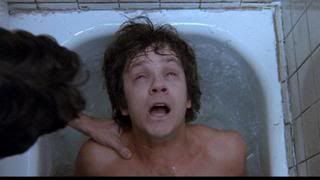
Jacob Singer (Tim Robbins), a Vietnam veteran, begins to have strange demonic visions that seem connected to his experiences during the war. Discovering that the surviving members of his platoon are experiencing similar dreams, Jacob begins to believe that his unit were the subject of tests by the American military. As the walls of his reality break down, and his hallucinations become more frequent, Jacob begins to uncover what seems like a massive conspiracy. Haunted by visions of death, including that of his young son, what is fantasy and what is delusion soon become difficult to discern.


REVIEW:

Director Adrian Lyne is best known for erotic thrillers like Fatal Attraction, but with Jacob's Ladder he proves to have some serious chops when it comes to psycho-horror. Hanging off an amazing performance by Tim Robbins, the film creates some wonderful tension with its dream within a dream state, and has a memorable shock ending that still remains a bit shocking even after the audience has been bombarded with decades of of M. Night Shyamalan twists.

Admittedly, some of the fun of the film comes from picking out the many actors in the cast who went on to some degree of fame. Ving Rhames (Pulp Fiction), Eriq La Salle (E.R.), Jason Alexander (Seinfeld), Macaulay Culkin (Home Alone), and even blink-and-you'll-miss-'em appearances by Lewis Black (The Daily Show) and Kyle Gass (Tenacious D!). However, at times this is a relentlessly bleak film with some rather disturbing imagery in the Cronenberg vein. It's often only Robbins' boyish charm, along with a winning supporting performance from Danny Aiello as Louis, Robbins' chiropractor, that add a little light to the subject matter.

In the most telling dialogue in the film, Louis (Aiello) tells Jacob (referring to Meister Eckhart):
Eckhart saw Hell too. He said: The only thing that burns in Hell is the part of you that won't let go of life, your memories, your attachments. They burn them all away. But they're not punishing you, he said. They're freeing your soul. So, if you're frightened of dying and... and you're holding on, you'll see devils tearing your life away. But if you've made your peace, then the devils are really angels, freeing you from the earth.

This surprising bit of enlightenment informs the second half of the film greatly, and is a hint at Jacob's final fate.


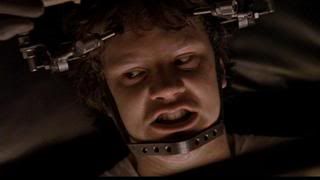
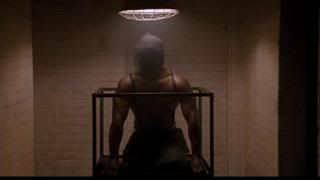
Robbins plays Jacob as a disturbed, but very sympathetic character unable to deal with his reality slowing melting away. It's a charged performance, particularly in the scene (burned into my young consciousness) where he's wheeled into an operating room, tied to what appears to be some awful piece of medical equipment, and told that he's dead before they start operating on him. In the commentary, Lyne says that Robbins' acting in this scene made himself and his cameramen weep, and it remains a very disturbing, powerful scene.

The supporting cast is fine, with Elizabeth Peña giving a strong performance as Jezzie (short for Jezebel), Jacob's girlfriend. She has to strike the right note of sympathy, while maintaining moments of anger and frustration with Jacob's state, and her character has a strange sexiness even as her demonic tendencies are hinted at. Jason Alexander has a nice turn as a ice-chewing, frustrated lawyer, and Eriq La Salle gets a few nice character moments late in the film.


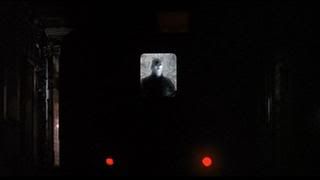
Lyne chose to go with all practical effects for the film, and the choice proved to be a strong one. The repeated effect of a person's head wailing around in fast motion (created by filming the actor at 4 frames a second) works exceedingly well, and is a technique aped in countless music videos and films (and video games, it would be hard to imagine Silent Hill without this film as reference). The choice to show some of the demonic imagery in flashes, or for just a few frames, makes the slow descent into hell feel very real.

The bad trip imagery can be effective, but sometimes (like in the appearance of tentacles in the subway scene) come off as a little hokey. The jumping around in time (and, apparently, reality) can be a bit difficult to take as well, sometimes coming off like an average Twilight Zone episode rather than a fully fleshed out film, but things tighten up in the final act. The religious imagery (particularly in the naming of the characters) can be a little obvious, but Lyne seems very comfortable with his pretensions and is deftly able to deliver the psychological goods.


The Special Edition DVD was originally released in 1998, and while the film is shown in it's original 1.85:1 format, the print is very grainy looking. Still, for a film that originally bombed, some care has been taken with the supplementary materials.

First, we have a commentary with director Adrian Lyne. It's screen specific, and often quite interesting, but there are long gaps (particularly near the end) that slow the whole thing to a crawl. Lyne is obviously quite fond of the film, and his memories of the production are sporadic but very entertaining.

Unfortunately, most of the interesting information is repeated in the half hour Building Jacob's Ladder featurette which also features talking head interviews with writer Bruce Joel Rubin (writer of Jacob's Ladder and Ghost) as we as some small interview snippets with Tim Robbins, Elizabeth Peña and Danny Aiello. Rubin seems appreciative of the changes which Lyne brought to his script, but is critical of the removal of a scene with Peña late in the film. The behind the scenes footage, particularly of the terrifying decent into hell, is quite interesting.

We are also treated to three rather significant deleted scenes with optional director's commentary. All come near the end of the film, though it's the Peña scene which is most significant. Its inclusion would have made the film a bit easier to interpret, but I don't think the film feels like it's missing the scene. The other two would have made the transition to the ending less abrupt, but would have slowed the pace at a critical time.

A theatrical trailer, television spot, cast & crew information and production notes round off the package.


Looking back, Jacob's Ladder seems to have had more influence on popular culture than one might think. While the director was going over territory mined by directors like David Cronenberg and David Lynch, this Vietnam variation on An Occurrence at Owl Creek Bridge remains slightly more palatable while still featuring some shocking and disturbing imagery. A terrific psychological horror film featuring one of Tim Robbin's most impressive performances.

Monday, October 6, 2008

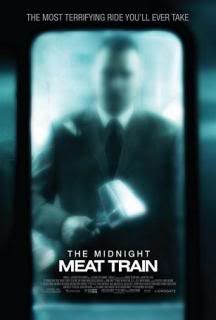
The Midnight Meat Train (2008)


Unlike video games, literature has had a much better rate of success when it comes to transfering the essence of the medium to the silver screen… that is unless your name is either Clive Barker or Stephen King.

The translation of King's work from book to visual format has undergone a sea change from campy to monumental thanks to the mini-series format.

Meanwhile, poor Clive's only iconic cinema character, Pinhead, has seen his stock drop severely over the course of several embarassing sequels to the Hellraiser franchise.

The Midnight Meat Train represents a return to good form for Barker fans, and don't be fooled by the silly title.

Here there be monsters.


Our story begins with a day in the life of photographer, Leon Kauffman (Bradley Cooper). Leon is an aspiring artist living solely for that one perfect shot; that picture that tells a thousand words. Unfortunately for Leon, he can never seem to seem to capture that special image. He's always in the right place, but he's never there at the right time.

Leon makes a meager living selling photos to the local newspapers, but he dreams of one day making it big and schmoozing it up with the well to do members of the nouveau riche art community.

On the urging of his girlfriend, Maya (Leslie Bibb recently of Iron Man fame), Leon goes out one night in an effort to finally capture that perfect moment. He manages to foil the near rape of a famous fashion model, Erika Sakaki (Nora), only to snap a photograph of her last moments on earth before she falls victim to Mahogany (Vinnie Jones), a serial killer who prowls the subway and has apparently been at his job for more than a century.


Despite being cursed with one of Clive Barker's trademark, unintentionally hilarious story titles (remember Rawhead Rex?), The Midnight Meat Train is actually a fairly effective chiller.

Ryuhei Kitamura keeps the pacing and the narration very tight and as you would expect from something based on the work of Britain's master of splatterhorror, the blood flows in rivers. It's a real shame that Lionsgate didn't have enough faith in this movie to give it a wide release because this movie really is much smarter than the humorous title would indicate. The performances are passable as far as horror movie standards goes. Vinnie Jones is menacing and Cooper does the best he can with what little is available, but Brooke Shields is content to merely chew on scenery and cash a paycheck.

There are quite a few moments in the film that are complete throwaways as far as the plot goes, but I can forgive Kitamura. After all, this is based on one of Barker's earliest short stories and Clive had a knack for trading plot for gore. Barker's gift for conjuring visions of nightmarish landscapes is somewhat betrayed by his hamfisted foreshadowing. Just read the short prose, Dread, sometime and you'll see what I mean.

The ending is predictable but Kitamura does his best with material that was pre-designed to telegraph nearly everything.

Thankfully, we horror fans have FearNet OnDemand to thank for bringing this movie directly to the masses at a cost of zero American dollars for the entire month of October. Check it out for yourself and then write the brass at Lionsgate a nasty letter letting them know what cowards they are for keeping this project in the dark, yet forcing another meaningless SAW sequel on us later on this month.

For the staff here at MoveFeast, Christmas isn't the most wonderful time of the year.

Halloween is.

Tuesday, September 30, 2008

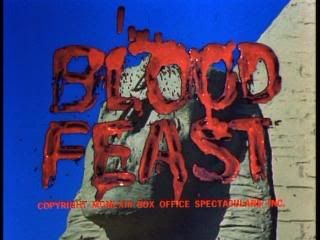
Blood Feast (1963)


PLOT:

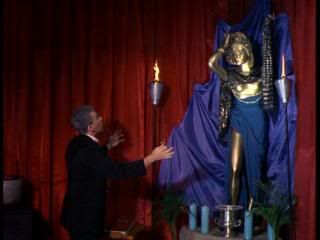
You mean you don't know? Ok.. here's the broad strokes. Fuad Ramses (the fuzzy eyebrowed Mal Arnold) is a caterer who, in an attempt to resurrect the Egyptian goddess Ishtar, starts butchering women and stealing their body parts. Ol' Ramses is hired to cater a party for the young Suzette Fremont (Playboy Bunny Connie Mason), who is being wooed by Det. Pete Thornton (William Kerwin) who is hot on Ramses trail. Except not really. Suzette's mom walks in on Ramses attempting to chop her daughter's head off, which sends Thornton chasing after the limping murderer. Attempting to escape in the back of a garbage truck ends up being Ramses' undoing, as he's unconvincingly crushed to death. "He died a fitting end for the garbage he was", says the police captain. So true.


REVIEW:

About Blood Feast, director Herschell Gordon Lewis famously said: "I've often referred to Blood Feast as a Walt Whitman poem. It's no good, but it was the first of its type". And indeed the film was the first to be sold solely on the copious amounts of gore onscreen, setting the stage for most of the exploitation-horror over the next four decades. It's influence can be seen in the work of filmmakers as diverse as John Waters and Eli Roth. It's had tributes and sequels and has been immortalized in the minds of fans of cult and horror cinema, along with other H.G. Lewis classics like 2000 Maniacs, The Wizard Of Gore, and Color Me Blood Red. The impact of the film simply cannot be denied.

But it's certainly no good.

The performance range from passable to pitiful, with Mal Arnold's wild overacting clashing harshly with Connie Mason's mannequin-like performance. William Kerwin is solid in the lead, but is made to look inept and ineffective by a script that seems to have been made up as the creators went along. The direction is pedestrian, and the effects are totally primitive. The film barely has enough action to fill its scant 70 minute run time, and tension and suspense is almost non-existent.


But, frankly, that's not why anyone came to see this film. They went to see copious amounts of violence, and the film certainly delivers that. From the opening scene showing a young lady getting her leg hacked off, we know we're watching something totally different from the nudie pictures popular at the time. All the usual skin and sex is traded for bloodshed, and in fact the film features absolutely no nudity or coarse language. Lewis (and producer David Friedman) figured that they didn't want to give censors any more ammunition than was necessary.

The film remains watchable for a combination of historic importance, and because of its enduring ridiculousness. Everything feels exaggerated in one way or another, with the unconvincing effects preventing the audience from being too disgusted by the whole thing. The final chase scene is particularly laughable, as Ramses limps slowly across a desert but still manages to out-pace the officers running after him.


Of a much higher quality than the rest of the film is Lewis' memorable soundtrack, particularly the pounding drums of the main theme. In the commentary Lewis mentions spending longer on the soundtrack than on the actual film, and it shows. Lewis was an amazingly economical director, and certainly didn't waste time or film in the process of making a feature.

For all the criticisms of the film itself, the DVD from Image Entertainment (and Something Weird Video) is an absolute delight. While its low-budget origins are obvious, the film looks bright and colorful. The full screen transfer is as close to perfect as we're likely to see.

We're also treated to some wonderful (and unique) extra features:

First is the short film "Carving Magic", starring William Kerwin and the late Harvey Korman showing us the proper way to carve a number of different meats. A morbidly appropriate companion piece to the main feature. We also get the original theatrical trailer for Blood Feast, featuring the talking head of Kerwin suggesting parents and children leave the theater while the trailer ran (barf bags were sometimes provided for viewers on the film's original release). Fifty minutes(!) of incredibly rare outtakes round out the video extras, featuring (according to Lewis) almost all of the footage that was shot but not included in the film. While there is no original violence on the outtakes, there are a few shots of nudity that don't appear in the final product.


The DVD also features a second audio track featuring commentary from director H.G. Lewis and producer David Friedman. The commentary is wonderfully informative and full of funny stories from the two men who obviously have a lot of fun looking back at their fascinating careers. They go into detail in regards to the difficulties of releasing such a unique film, as well as the revolutionary way they went about marketing it. At heart, both men are (admitted) carnies, and sometimes still appear to be in awe of the success of their big score.

The special features are rounded off with a gallery of exploitation art, featuring various newspaper ads for the film as well as stills and poster art. It finishes with a nice photo of the cast and crew.


Blood Feast is essential viewing for those interested in the history of exploitation, gore or horror film-making. It quite literally changed the way films were made and marketed, and its influence is still felt. While time hasn't been kind to the effects and performances, there are still some unintentional laughs to be had, and the great DVD package by Something Weird makes the whole thing go down smoothly.

See it to say you've seen it.

Wednesday, September 24, 2008

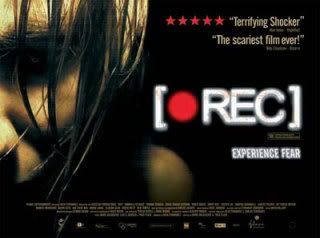
[.REC] (2007)


When it comes to horror films, I've always been a big fan of the "found footage" subgenre. Whether it be Cannibal Holocaust or Cloverfield, there is something inherently sinister about a piece of work that is fundamentally fictional, yet by viewing events in the actual first person instead of the omnipotent first person found in conventional cinema, our wilful suspension of disbelief is immediately challenged.

If we're eyewitnesses, then the terrible events unfolding right before our eyes must be true, correct?

The "found footage" film gives us a snapshot in time. It casts aside conventional cinematic mechanics such as character development because we're dropped in the middle of real people living real life. Do we honestly need life stories, detailed expositions, or flowery soliloquies to help us find spritual linkages with our fellow man? Isn't the merest measure of human compassion enough?

The individuals around us are not cardboard cutouts nor are they metaphors.

They are wives, husbands, mothers, fathers, daughters, sons, friends, family.. everyone..

And then all at once, something indescribably brutal happens to them..

And maybe, just maybe..

We are next..


In [.REC], we're transported to a fire station located somewhere in Barcelona, Spain. In no time flat, we meet perky and pixie cute telejournalist, Ángela Vidal (Manuela Velasco), and her trusty cameraman, Pablo (co-director, Paco Plaza). We never get to see Pablo's face but his role is arguably the most important one in the film as Pablo serves as the eyes and ears of the audience.

Ángela is the anchorperson for a serio-documentary series entitled "While You Slept": a television program focusing on the various social services that keep things running while we're all in bed.

Immediately we can tell that poor Ángela is frustrated not only with this particular assignment, but perhaps with her job in general. Being the hostess for a humdrum public affairs program that no one is awake to watch doesn't exactly put you on the fast track to fame and fortune. Professional to a fault, Ángela does her best to spice her report up but nothing seems to work. There are limits to the amount of excitement you can add to a story if absolutely nothing is going on.

As fate would have it, the fire station receives a call and the team Ángela is assigned to follow heads off to respond to a medical emergency at a small apartment building.

Apparently the tenants there are concerned about an elderly woman that suddenly erupted into a fit of screaming and then fell ominously silent. As the investigation progresses, the tension mounts towards a fever pitch and once the dying starts, the safety catch and all bets are officially off.


There is something both courageous and wicked in the way that Jaume Balagueró and Paco Plaza generate scares.

Unlike the continuous dropping of the f-bomb and hysterical shrieking that passed for plot progression during the lengthy downtime segments of The Blair Witch Project, [.REC] gives up just enough information to answer some of the questions in your head and generate other questions.

However, before you have time to process this information you're once again on the edge of your seat at the mercy of the durability of Pablo's camera.

If Pablo can't see, then neither can you.

Terrible still is the overwhelming, "George Romero zombie virus"-inspired notion that no one is safe. Everyone (and I do mean everyone) is either potential victim or a potential monster.

At a shade over ninety minutes, the narrative and the action in [.REC] are kept so tight that they threaten to lash out; not totally unlike the creatures lurking in the shadows.

However, the pacing of [.REC] is also somewhat problematic. Balagueró and Plaza blatantly shotgun a couple of plot holes and a highly puzzling, genre-busting story development right by you and they know that because of the nature of the "found footage" subgenre, you're forced to accept whatever you're offered as undeniable fact.

After all, the camera doesn't lie, does it?

[.REC] is without a doubt the most frightening film I've seen since The Descent and like The Descent, I can easily overlook a minor flaw or two in celebration of what this movie represents. Someone somewhere still loves the horror genre enough to continue to crank out quality fright fests, and I will eternally be a happy camper as long as the scares keep on coming.

It shouldn't surprise anyone that Hollywood has already gotten their hooks into this. On October the tenth, Screen Gems will release the Jennifer Carpenter vehicle, Quarantine, which I've gathered is a near shot-for-shot remake of [.REC].

One suspects that the overproduced Tinseltown translation probably won't generate the gut-level reactions that [.REC] does, but secretly I hope that Quarantine is successful if only to kill the perpetuation of the sin that is the complete lack of a DVD or theatrical release of [.REC] here in North America.

[.REC] deserves a bigger audience and wider acclaim. If Quarantine is a necessary step to achieve that goal, then so be it.

Thursday, September 11, 2008

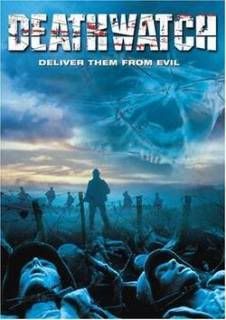
Deathwatch (2002)


A while back I reviewed the K-Horror / Military Horror offering, R-Point, for our beloved blog. This inspired me to track down some of the other war-related horror material out there and to my dismay, I found that the genre is really lacking in content.

Some of the more familiar titles most horror buffs will quickly identify are The Keep and Below, as well as the obvious ones such as Dog Soldiers and Aliens.

I've managed to track down a couple of the more obscure war / horror movies out there and to my dismay, found out that there is quite a sliding scale between the good, the bad, and the ugly titles of this particular genre.


Deathwatch takes place during World War I somewhere on the Western Front and drops us off smackdab in the middle of "everybattle." We're hastily introduced to Pte. Charlie Shakespeare (Jamie Bell) and seven more British soldiers in the near ritualized process of girding their courage and preparing their souls for the coming assault on German machine gun nests.

The battle is as bloody as one could imagine, and then inexplicably the shooting stops and night turns into day. The members of Y Company soon find themselves behind enemy lines, only to discover that everyone is dead save for two German soldiers. In their haste, the Brits kill the Germans despite the fact that the Germans are clearly trying to warn the British that something bad is going on.

But, horror movies wouldn't be horror movies if people actually listened to cautionary advice.

Like R-Point, the assault on the soldiers is dual in nature.

Not only is Y Company in physical peril from supernatural forces, but the stress accompanied by trying to comprehend something they're unable to understand and destroy something that they're unable to kill pushes the unfortunate soldiers beyond the limits of their mental and physical endurance.

The fate of these eight men is to either perish or go insane.


On the DVD commentary, director Michael Bassett sheepishly admits that Deathwatch was his first motion picture and the film definitely suffers more than its share of freshman gaffes.

The soldiers wander aimlessly around an apparently endless trench towards predictable encounters with the unknown but even when things become tense, neither the tempo of the musical score nor the pacing of the action speeds up all that much.

It's almost as if this is a stage play or a spoken word version of a Wilfred Owen poem masquerading as a movie.

To his credit, Bassett does his best to save the best stuff for last but once again, the pacing is so deliberate that there are more "war is hell" philosophical blows to the back of your head than there are actual shocks to your system. In the attempt to follow the "never show the monster" rule of thumb, Bassett only succeeds in playing his hand too early rather than adding a sense of dread.

The ending is very clever but thanks to the aforemention deliberate pacing coupled with a morality play focus, it is totally expected.

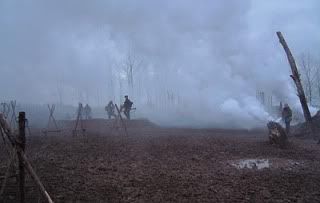
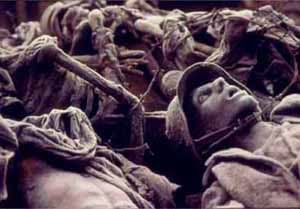
If there is anything that this film gets spot on, it is the scenery. Absolutely everything and everyone is covered in mud, leaving you no doubt that you are in the middle of some dairy pasture turned hellhole somewhere in France. The "Trench" seems a bit stagy at first but that quickly turns into a non-issue. As events unfold, you quickly realize that the "Trench" is less of a place and more of a metaphor.

The themes Deathwatch explores are universal and relevant, but not presented in such a holier than thou manner as to make the movie unwatchable.

If you're worried about the directorial future of Michael Bassett, fear not. Mr. Bassett certainly learned from the shortcomings of this movie, because I've seen his second film entitled Wilderness (2005), and it is quite the effective, mean-spirited thriller.

This leaves me hopeful that Bassett's next project, a full-blown screen presentation of Conan creator Robert E Howard's lesser known pulp icon, Solomon Kane, will be even better.