Showing posts with label Criterion. Show all posts

Tuesday, August 10, 2010

The Friends of Eddie Coyle (1973)

"One of the first things I learned is never to ask a man why he's in a hurry. All you got to know is I told the man that he could depend on me because you told me I could depend on you. Now one of us is gonna have a big fat problem."

THE FRIENDS OF EDDIE COYLE is an underrated slice of 70's crime drama about a lowlife busher running guns for the Mob who finds out he's facing jail time with no appeal. Torn between turning snitch and preserving his loyalty and integrity, Coyle moves glacially towards his final decision, while unbeknownst to him, the machinations of others, moving quickly and wily, are setting an unwitting trap from which Coyle himself cannot escape.

Coyle is played by Robert Mitchum, who gives a performance full of pathos and gravitas, accentuating the weariness and wariness of a two-bit loser looking to cash out before it's too late. Mitchum understands that for a character like Coyle, there is no time for melodrama. Check out how he keeps his cool here while dealing with a snot-nose hot shot who thinks he knows better. Coyle's message is stubborn and worn, easily dismissed were it not delivered with just the right note of casual menace:


Scenes like this make the film great as Mitchum brings the weight of his entire film noir career to bear on a single character whose flaws embody the path a man would take to get out of a situation he's remained in too long. Coyle doesn't want to turn snitch but he no longer wants to risk jail and he's too proud to see his family end up on welfare. Family still means something to him, even if he seems a stranger to his own children. Having spent a life unhurried and unambitious, he now struggles to turn those instincts on. Mitchum is smart in making Coyle slow but not stupid. He tries to play the odds, find an angle, give up the hot-shot to protect his mob buddies but it all backfires (as it must, the film makes you feel as if its outcome is inevitable).

In between the film's quieter, character moments, director Peter Yates stages a series of ever-escalating bank heists, scenes that drip with tension as the scenarios heighten and unfold. The 70s was a bank heist decade and these scenes while good are also cold, calculated, almost sterile -- the complete opposite of the inflamed passions of DOG DAY AFTERNOON. You are witness here to the clinical efficiency of the Mob, who treat home invasions and bank robberies as jobs only, no passion just purpose. The way Yates weaves these storylines together as counterpoint is brilliant. We don't quite see the connection between these high-stakes hits and Coyle's bleak existence until it is almost too late for Coyle to escape. He is the bottom layer, the mud on the boot. When it's time to sever connections, he's the one wiped off.

The film makes great use of Boston as both a location and a character, relying on the setting to tell a greater story. You learn more about the tight-lipped Coyle from where he lives and socializes than you do from any exposition of character. This is the seedy underbelly of a decaying society (strip malls, bowling alleys, dive bars, diners) juxtaposed with the shiny surface of downtown Boston, City Hall, and the suburban banks and homes the Mob hits. Two worlds difficult to bridge, and to survive, Coyle would have to bridge them, though he is slow, beaten to the punch by Peter Boyle's malevolently underhanded Dillon, a character rich in seasoned mistrust and opportunism. Where Coyle is steady in his habits, easy to set up, Dillon is sharp, quick to sell-out.

Peter Yates had directed several incredible crime films previously, including both BULLITT and ROBBERY. This, however, may be his masterpiece. A grim slice of 70's understatement that languished for decades before being faithfully and lovingly restored by Criterion. All fans of 70s cinema, particularly of the crime and noir persuasion, owe this film a viewing.

THE FRIENDS OF EDDIE COYLE (Yates, USA, 1973)


Monday, February 1, 2010

The Long Good Friday (1980)

"For more than ten years there's been peace - everyone to his own patch. We've all had it sweet. I've done every single one of you favours in the past - I've put money in all your pockets. I've treated you well, even when you was out of order, right? Well now there's been an eruption. It's like fuckin' Belfast on a bad night. One of my closest friends is lyin' out there in the freezer. And believe me, all of you, nobody goes home until I find out who done it."

THE LONG GOOD FRIDAY does a great job of taking a relatively simple story and elevating it to a tragedy of almost Shakespearean proportions. Harold Shand, a deeply flawed and violent man with little control over his impulses, has clawed and sacrificed his way to the top of the London underground by sheer dint of hard work and determination. He's sowed peace for ten years between the warring factions, bought councilmen and police detectives, established a corporation with the aim of legitimizing his enterprises. And now he's about to seal the deal of a lifetime, a sweeping real estate venture to revitalize the London docklands in preparation for a 1988 Olympic bid. Here, at the cusp of legitimacy, his powers at a pinnacle, with both the American mob and the European Union looking to finance him, it falls apart -- rapidly and violently -- in less than 48 hours over $5,000 of palmed cash from a suitcase intended for the IRA.

From here THE LONG GOOD FRIDAY could easily have devolved into a simple revenge thriller but it has more ambitious things to say, as a character study, a crime film, an examination of late 70's British values. London was undergoing rapid change at the time. Men like Shand were being pushed out by major corporations in the London interior and immigrant drug dealers in the boroughs, places like Brixton, where Shand has to grit his teeth to bear the changes he sees. Shand is smart, stay with the times, legitimize, get corporate. But his own personal failings lead to his undoing -- trust in the wrong people, an unchecked ego, tendencies toward rapid violence. It's funny, we know all along who the traitors are but not what their motives were. The suspense comes not from the mystery of who did it but why they did it and how Harold is going to salvage it. That the whole thing implodes over $5,000 would almost be laughable if it weren't so believable.

The performances here are across the board sensational. Bob Hoskins owns Harold Shand, filling him with a depth of complex emotion: explosive rage, surprising tenderness, layered guilt, inflated ego, short-sightedness and delusion. It is a masterful performance, particularly in the closing shot of the film where the camera just hangs on Hoskins face as we see him mentally work through the last 36 hours, seeing all mistakes and recognizing all possibilities. There is time for regret, anguish, anger, but no despair. Harold is a man who always knew his end would come from the point of a gun.

Helen Mirren absolutely dazzles as Victoria, a high-class lady slumming with a gangster in the hopes of bringing him up to her level. She is intoxicated by his common roots and extraordinary power. She revels in the touch of class she brings him and knows that the ultimate control of his legitimization lies with her. Only she can handle his extraordinary temper (as evidenced by that amazing scene where he emerges, blood soaked from the boat screaming for vengeance, and she stops him, slapping him fiercely and clutching him tight, wrestling and reasoning him into a more intelligent solution). Her handling of the American mob men is delicate yet powerful. Her rejection of all outward advances by other men is firm. She, like Harold, is not to be fucked with. Mirren reportedly worked hard with the screen writer to ensure that Victoria was an equal partner to Harold, a fully developed character and not a typical gun moll. The film is certainly better for it.

Eddie Constantine gets a lot of flack for his portrayal of Charlie. His acting does seem a bit stiff at first but I actually think it works. Charlie is Mafia gone legit, uncomfortable with the implications of dealing with Harold, who he sees as unable to cope with legitimacy. He is also superstitious. I think Constantine does a great job bringing across Charlie's inherent awkwardness coupled with a corrosive seriousness. Stephen Davis is also fun as Tony, the slimy snake-oil lawyer Charlie brings with him. One of my favorite scenes is Shand's evisceration of Charlie and Tony as cowards: "The Mafia? I've shit 'em." Harold Shand takes shit from no one.

The film is loaded with great British character actors like P.H. Moriarty as "Razors" and David King as "Parky" (it felt like Shand took his head off with that vicious backhand) both of whom deliver impressively in their small but vital roles. Derek Thompson does a great job dealing with Jeff's guilty insecurities, the sense that he doesn't belong in this world because he's smart and easily scared. God, he meets a brutal end. This is one of the grittiest, most violent films I've ever seen. But its not excessive. Not exploitational at all. Each violent act has a purpose to it, a method, a major contribution to the story. That said, at the time, it certainly deserved this rating:


THE LONG GOOD FRIDAY (MacKenzie, UK, 1980)

Wednesday, June 3, 2009

Empire of Passion (1978)

EPTitle

PLOT:


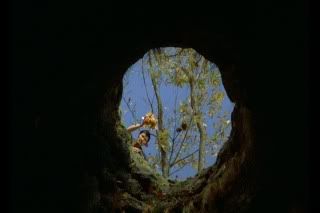
A torrid affair between the young Toyoji (Tatsuya Fuji) and an older housewife, Seki (Kazuko Yoshiyuki), rages out of control. When their erotic play goes too far, the couple find themselves painted into a corner. At Toyoji’s urging, the two hatch a scheme to murder Seki’s husband, Gisaburo, by getting him drunk and strangling him. Soon, Toyoji becomes obsessed with scattering dry leaves into the well where Gisaburo’s corpse is hidden, and the rumours coming from the village’s gossipy women begin to get under Seki’s skin. It isn’t long before the ghost of Gisaburo appears in Seki’s home, tormenting her and her lover…

EP1

REVIEW:


Set in a rural village in 1895 Japan, Nagisa Oshima’s Empire of Passion is the director’s follow-up to the notorious In the Realm of the Senses, an explicit and controversial film decried as pornography and still banned in several countries. Obviously such a film would be hard to outdo, and so Oshima cuts back on the explicit sex (though there is still that) and focuses on a more traditional ghost story.

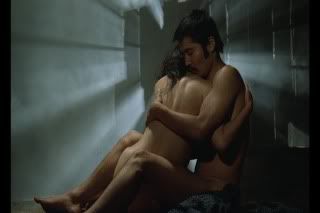
The power of the connection between Seki and Toyoji is established early in the film. The affair properly begins when Toyoji forces himself upon Seki. In what looks like a fairly blatant case of chauvinist storytelling, Toyoji overpowers Seki, violently raping her. After that, they’re a couple, bonded by their mutual physical attraction. Those who wish to cast a generous eye towards Oshima will note that Seki’s character is older and very restrained by her position in life, especially as a woman in feudal Japan. Perhaps force was necessary on the part of Toyoji to get past those defences which were set up by society, and not by Seki’s true feelings. Once breached, they are free to share their mutual love, even if that first contact required violence.

Or maybe it’s just misogynistic bullshit. Either way, the initial sex act is followed by a few more, each one rendered fairly explicitly (if nowhere near the ballpark of In the Realm of the Senses).

EP2

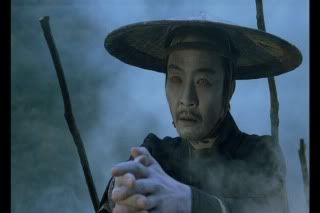
Be warned: if you’re approaching this film because you’re looking for a scare, you’re going to be sorry. Though this is a ghost film, it’s not the sort typical to America, and it certainly isn’t like the current crop of J-horror. This is a rural ghost, who acts more like a being out of old wives’ tales or folk legend. Gisaburo haunts his wife and Toyoji, to be sure, but he acts as a symbol of their guilt, a constant reminder of their crime rather than a vengeful demon or poltergeist.

Empire of Passion isn’t a very fast paced film, and I found that the first two acts dragged a bit, unraveling in a fairly predictable way. Fortunately, the last act of the film really turns up the thrills, adding a few chilling visuals that might not make you jump, but will probably make you shudder. It certainly helps that Oshima was a director with an eye for composing a striking scene.

EP3

The Criterion Collection disc of Empire of Passion contains a few special features to interest the curious. Perhaps most helpful was the “video essay” by Concordia University’s Catherine Russell, comparing Empire of Passion with In the Realm of the Senses. The video essay is a good idea, since often a full, scholarly audio commentary is unnecessary, and 20 minutes or so is enough for Russell to explain Oshima’s (naïve) belief in the liberatory power of female sexuality. Interviews with the two lead actors and production consultant Koji Wakamatsu (director of the brilliantly titled Go Go Second Time Virgin) are nice bonuses, but probably won’t add a whole lot to anyone’s appreciation of the film.

Empire of Passion is a fine film, no doubt, but unless there’s something in particular that draws you to the film--the explicit sex, the director, the ghost story--it’s nothing that anyone needs to rush out and see.

Thursday, June 5, 2008

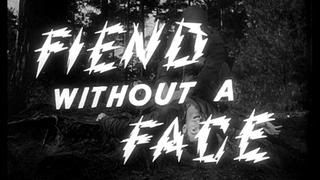
Fiend Without a Face (1958)


The most interesting thing about the DVD release of Fiend Without A Face is, frankly, the company that released it. The Criterion Collection prides itself on releasing "important classic and contemporary films", and indeed the company pioneered "special edition" releases of the most well regarded films, ranging from Citizen Kane to The Seven Samurai.

Their definition of "important" has been criticized as they released films like The Rock, Armageddon and The Blob, however those films have a cultural importance (and fan-base) that justified their releases. Fiend Without A Face has quite a fan-base as well, collected from decades of television showings and blurry memories of the film's creature. That being said, while Fiend remains an entertaining, above average science fiction creature feature, i'm not quite sure it deserves to be among such luminaries.

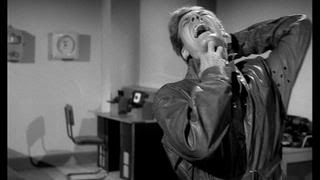
Taking place on a Canadian based American Air-base (though actually filmed in England), the film centers on a series of mysterious killings that the locals are blaming on nuclear experiments (dealing with cold war missile control) taking place at the base. Faced with growing unrest, Maj. Jeff Cummings (Marshall Thompson) decides to research the incidents, leading him to Professor Walgate (Kynaston Reeves), a scientist with experience researching telekinetic abilities. After forming a relationship with the scientist's assistant (Kim Parker), Cummings discovers that the bodies of those killed have had their brains and spinal cords removed from their bodies. Christening the attackers as "mental vampires", Cummings discovers that Walgate's experiments have gone out of control, and their power is growing thanks to the nuclear tests.


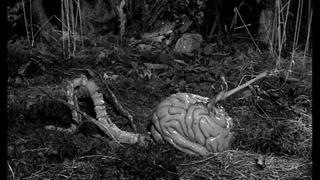
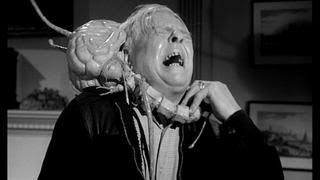
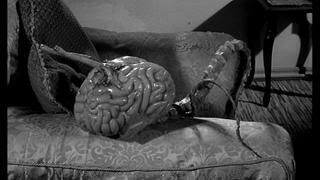
The creatures themselves are truly unforgettable. Disembodied brains with antennae and a wriggling spinal cord behind them must have been an eye-opener for impressionable youth in the 50s, and the stirring, bloody climax of the film was something unheard of at the time. In fact, the film was edited for violence in both England and the United States, and banned outright in several other countries. Compared to films today the violence is certainly tame, but it's not difficult to see why audiences (and reviewers) were disturbed by the content in a pre-Blood Feast world.

The creatures are brought to life through some sub-Harryhausen stop motion effects that still remain effective, though charmingly dated. When shot, the creatures explode with blood and eventually melt gruesomely. However, almost all of these very amusing effects take place in the film's final 15 minutes.

Unfortunately, the creature is mostly what remains worth recommending about the film. The acting ranges from passable (Marshall Thompson in the lead), to laughably bad (Stanley Maxted as Colonel Butler), and the first 50 minutes of this 74 minute film move at a slow pace, the creatures remaining invisible when they attack. The direction by Arthur Crabtree is flat and pedestrian, and while the script (by Herbert J. Leder, director of some notable monster movies himself) throws out some entertaining scientific gobbledygook, the pacing is terminally slow.


There are also strange inconsistencies in the plot, particularly when it comes to the relationship between Cummings and the professor's assistant. She bitterly chides him for upsetting the professor in one scene, and then makes sympathetic eyes at him in the next. Such plotting errors are to be expected in genre films of the era, but one would hope that a film in the Criterion collection would be a cut above. Unfortunately this is not the case.

While I question the choice of releasing the film in the first place, Criterion (as usual) did a great job with the presentation. The film suffers from print damage in the first ten minutes, but after that the print is clear of significant damage and presented in its original 1.66:1 ratio.


They were also able to come up with some interesting special features, the most significant being a full length commentary (actually a conversation) between author Tom Weaver and executive producer Richard Gordon. The track is candid and genial and features some wonderful information regarding the film's production. I'd go as far to say that the commentary is often more entertaining than the film itself, as Gordon's memory remains sharp and Weaver is a good-natured interviewer.

We're also treated to an illustrated essay on British science fiction and horror film written by Bruce Eder, as well as trailers for The Haunted Stranger, Corridors Of Blood and The Atomic Submarine. Finally, there is a photo gallery with commentary from Gordon, as well as a gallery of vintage newspaper advertisements.


I don't mean to be harsh on what is actually a very memorable b-movie, I just feel that its reputation comes more from the messy, exciting climax (said to have inspired Night Of The Living Dead) then the hour or so that comes before it. Worth seeing, but don't go in expecting a science fiction classic.